By Parking Shades KSA Team | Published September 24, 2026
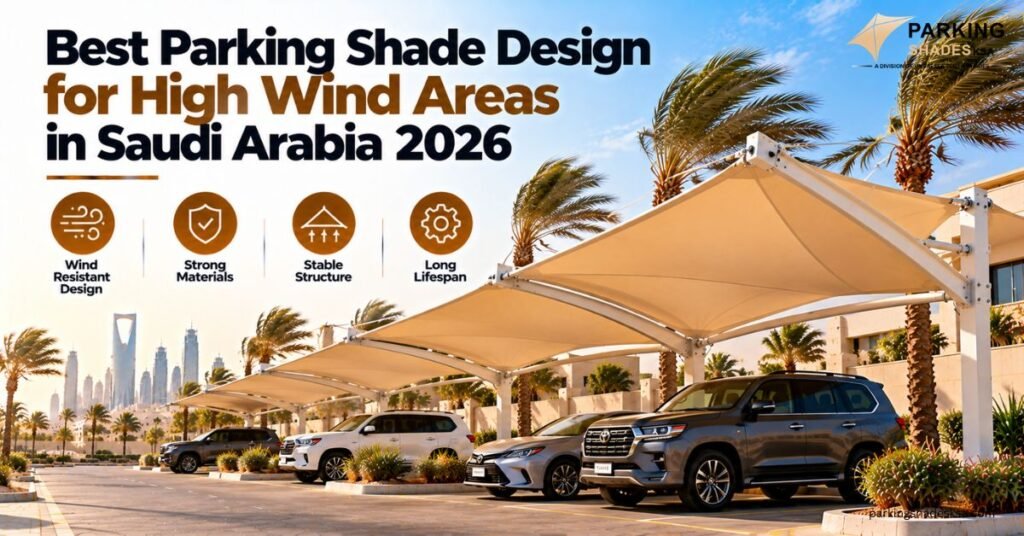
The best parking shade design for high wind areas in Saudi Arabia pairs a tightly tensioned, curved fabric shape with a breathable fabric, an engineered steel frame and deep footings. Cobra and cantilever frames with HDPE fabric are the most common winners on exposed sites. Shape alone won’t save a shade, though. This article explains which designs handle wind best and which details decide whether a shade stays put in a shamal.
Quick Answer at a Glance
Here’s what matters most on a windy site.
| Design choice | Better for wind | Why |
|---|---|---|
| Fabric type | Breathable HDPE | Air passes through and less pressure builds on the roof |
| Roof shape | Curved or peaked, tightly tensioned | Taut fabric flutters less and spreads load |
| Frame | Engineered steel sized for the site | Resists uplift and sideways push |
| Footings | Designed for the soil and wind load | Stops the frame rocking or lifting |
| Tension | Checked at handover and after storms | Loose fabric flaps and tears |
Why Wind Is the Real Test in Saudi Arabia
Heat gets the headlines. Wind does the damage. Seasonal shamal winds carry dust across the Eastern Province and central regions. Coastal sites in Dammam, Al Khobar, Jubail and Jeddah face gusts off the sea.
Wind acts on a shade in two ways. It pushes sideways on the frame. It also lifts the roof, just like it lifts an aircraft wing. The lifting force (called uplift) is what tears loose fabric and pulls weak footings out of the ground.
Uplift: the upward force wind creates under and over a roof. It’s often the load that decides how big the footings must be.
Most shade failures we’re called to inspect are caused by uplift and loose fabric, not by heat.
Best Parking Shade Design for High Wind Areas in Saudi Arabia: Five Rules
Good wind design follows the same five rules whatever the shape.
1. Let air through where you can
HDPE is a knitted fabric with tiny gaps. Air passes through and less pressure builds on the roof. Solid PVC blocks rain but catches more wind. Our shade structure products page lists both fabrics. On very exposed sites, a breathable fabric often means a lighter frame. Compare both on our car parking shades KSA range.
2. Keep the fabric tight
A slack fabric flaps. Every flap is a small shock to the fixings. Tight, curved fabric stays still and shares the load across the whole frame. That’s why tension is checked at handover and after storms.
3. Size the steel for your site, not a catalog
Wind loads change from site to site. Open desert, the coast and a sheltered city courtyard need different frames. In Saudi Arabia, structural loads are set by the Saudi Building Code (SBC 301 covers loads and forces). A proper design checks the frame against the loads for your location.
4. Build the footings for uplift
The footing holds the shade down. Soil type, footing size and anchor bolts all count. A beautiful frame on a shallow footing is the most common failure we see on older shades.
5. Avoid closed sides
Closing the sides of a shade with fabric turns it into a sail. The national car shade guide from the Ministry of Municipalities and Housing also bans closing shade sides with sails for shades in building setbacks. Leave them open.
Which Shade Shapes Handle Wind Best?
Every shape can be engineered for wind. Some start with an advantage. Whatever the shape, the final frame is checked against the loads for your site. The table compares the common options.
| Shape | Wind behavior | Notes |
|---|---|---|
| Cobra | Curved arm and fabric hold a stable form | Popular for public and commercial lots |
| Cantilever | Clean overhang, loads go to one column line | Needs heavier columns and footings |
| Double cantilever | Balanced arms on both sides of a central spine | Load is more even on the column |
| Pyramid | Fabric pulled tight from four sides to a peak | Very little flutter, good rain shedding |
| Flat post frame | Simple but flat fabric can flap | Needs careful tensioning on exposed sites |
Local Wind Conditions to Plan For
Not every Saudi site sees the same wind. Eastern Province coastal cities combine sea breeze, humidity and salt. Inland sites around Riyadh and Qassim see dust-laden gusts in the shamal season. Open industrial plots in Jubail or oilfield yards have little shelter at all.
These differences change more than the steel size. Coastal sites need stronger corrosion protection because salt attacks bare steel. Dusty inland sites need fabric that sheds dust and is easy to clean. On coastal jobs, steel is usually galvanized and then powder coated for a second layer of protection.
Access matters too. Many exposed sites are large and open, which helps cranes but leaves workers exposed during lifting. Steel and fabric are installed in calm periods and never lifted in strong gusts. Good planning keeps the program on time without taking risks. (One small thing people forget: the direction of the prevailing wind should guide which side the cantilever columns go on.)
How to Check a Supplier’s Wind Claims
Every supplier says their shade is wind resistant. Ask these questions before you sign. The answers should be given in writing.
- What wind speed was the shade designed or tested for?
- Which code or method was used for the wind load?
- How are the footings sized for uplift?
- What fabric tension is set at handover and how is it checked?
- What does the warranty say about storm damage?
- Can you show a similar shade on an exposed site?
How Parking Shades KSA Designs for Wind
Each frame is still designed for the site, because a coastal plot in Jubail isn’t the same as a courtyard in Riyadh. Our survey records exposure, soil, access and the direction of prevailing winds.
We’ve built wind-exposed projects for seaports and industrial clients (see our car parking shade projects), including King Abdul-Aziz Seaport, Jazan Sea Port and SABIC in Jubail. As a Saudi Aramco Verified Vendor , Parking Shades KSA works to documented quality checks.
Recommended Parking Shade Solutions for Windy Sites
These three products are our first picks for exposed locations.
Cobra Parking Shades
Cobra parking shades are durable and weather-resistant with a strong structure and sleek design. They give UV protection and suit businesses, commercial centers and public lots. Our Lina Municipality project uses cobra-style shades for public parking. View cobra car parking shades.
Cantilever Parking Shades
Supported from one side, cantilever shades use a strong steel framework designed for stability against strong winds, sandstorms and heavy rain. They keep bays clear for large vehicles. See cantilever parking shades.
Double Cantilever Parking Shades
The double-sided design covers cars on both sides of one column line. It can be made with PVC, HDPE or PTFE fabrics that are weather-resistant, UV-protected and flame-resistant. Balanced arms make it a sound choice for wide, open car parks. Explore double cantilever car parking shades.
Choosing a Shade That Stays Put
The best parking shade design for high wind areas in Saudi Arabia is breathable, tight, properly engineered and firmly anchored. Cobra and cantilever frames with HDPE fabric are proven choices when the details are right. Compare every structure in our car parking shade range before you book a survey.
About the Author
Parking Shades KSA Team.
Frequently Asked Questions
Can a parking shade survive a sandstorm?
A well-designed and well-installed shade can. The keys are tight fabric, a frame sized for the site and footings built for uplift. After each storm, check fabric tension, fixings and any cuts in the fabric. Small issues fixed early stop bigger damage later.
Is PVC or HDPE better in high wind?
HDPE usually handles wind better because air passes through the knit. PVC is solid. It catches more wind and needs a stronger frame. PVC is still the right choice where rain protection matters. Your designer should size the frame for the fabric you choose.
Should I take the fabric down before a storm?
For most permanent shades, no. They’re designed to stay up. On light or temporary shades, removing the fabric before a severe storm can prevent damage. Ask your installer which applies to your shade.
How deep should footings be for a windy site?
There’s no single depth. It depends on the soil, the frame size and the wind load. An engineer calculates it for each project. Be wary of any quote that uses the same footing for every site.
Does a taller shade catch more wind?
Generally yes, because wind speed tends to increase with height and a taller frame acts like a longer lever on the footing. That’s one reason heights are kept to what the vehicles need. For shades in building setbacks, the national guide sets a height of 2.5 to 3 meters.
Does the warranty cover wind damage?
It depends on the warranty terms. Read the terms for storm events and ask what inspections are expected to keep the warranty valid.